
El Paso County Criminal Records
El Paso County criminal records are filed with the District Clerk and County Clerk in El Paso, the county seat and one of the largest cities in Texas, sitting right on the Texas-New Mexico border across the Rio Grande from Ciudad Juarez. The District Clerk handles felony case files from the county's district courts, covering serious charges from drug offenses to violent crimes. The County Clerk keeps misdemeanor records from the county courts at law. El Paso County's border location and large population mean a high volume of criminal cases across all categories. If you are searching for a specific case or trying to find charges in El Paso County, the clerk offices downtown are where those records live. Arrest and booking data come from the El Paso County Sheriff's Office and the El Paso Police Department.
El Paso County Overview
El Paso County District Clerk
The El Paso County District Clerk holds felony criminal case records filed in the district courts. Felony charges handled here include murder, aggravated assault, drug trafficking, robbery, and other serious offenses. The clerk keeps the full case file from indictment through final disposition, including motions, plea documents, verdicts, and sentencing orders. All records are open to the public during office hours.
You can search El Paso County criminal records in person at the courthouse. The clerk's office can search by name or case number. Staff can pull case files and provide certified copies on request. Certified copies carry a per-page fee plus a certification charge set under Texas law. The District Clerk's office is part of the El Paso County court complex downtown.
| Office | El Paso County District Clerk |
|---|---|
| Address | 500 E. San Antonio Ave. El Paso, TX 79901 |
| Phone | (915) 546-2071 |
| District Court Phone | (915) 546-2021 |
| Hours | Monday through Friday, 8:00 AM to 5:00 PM |
| Website | epcounty.com/districtclerk |
The El Paso County portal at epcounty.com has contact info and links to the District Clerk, County Clerk, and Sheriff. Check the site for current hours and any changes to copy request procedures.
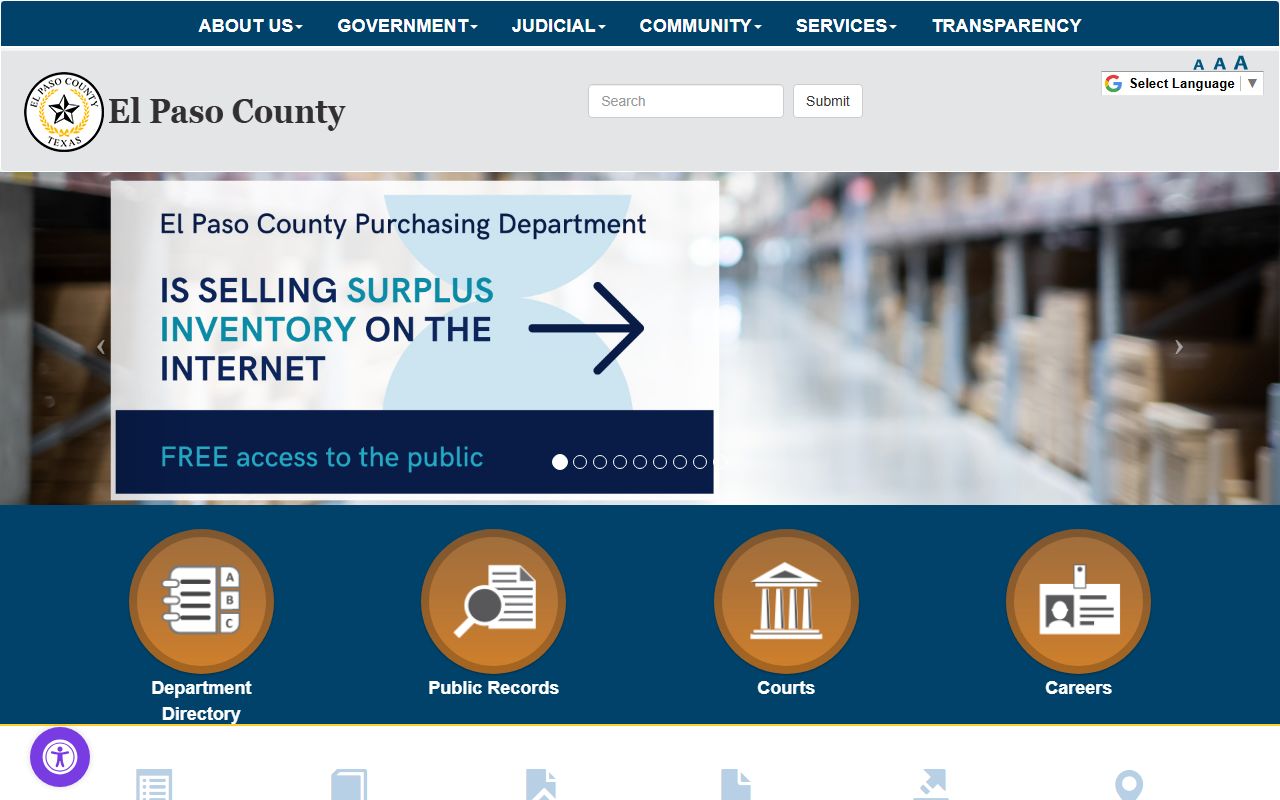
The El Paso County official portal links to all departments that handle criminal records, including the District Clerk and Sheriff's Office.
The statewide re:SearchTX system covers El Paso County district court cases. You can search by party name across multiple Texas courts. Documents cost 10 cents per page to download, with a $6 cap per document. This is a useful option if you want to search remotely without visiting the courthouse.
El Paso County Clerk - Misdemeanor Records
The El Paso County Clerk maintains misdemeanor criminal records from the county court at law. Class A and Class B misdemeanors are filed here. These cases cover DWI, simple assault, petty theft, and possession of small amounts of controlled substances. The County Clerk holds charge information, plea records, and final dispositions for all misdemeanor cases in El Paso County.
The County Clerk is located at 500 E. San Antonio Ave. in El Paso. Records are available for public inspection, and staff can pull certified copies. If you are unsure whether a case is a felony or misdemeanor, the charge type decides which clerk office holds the file. Felonies go to the District Clerk. Misdemeanors go to the County Clerk. Both offices are in the same courthouse complex.
Some El Paso County criminal cases may be accessible through the statewide TOPICs system, which collects court data from participating Texas counties.
El Paso County Arrest Records
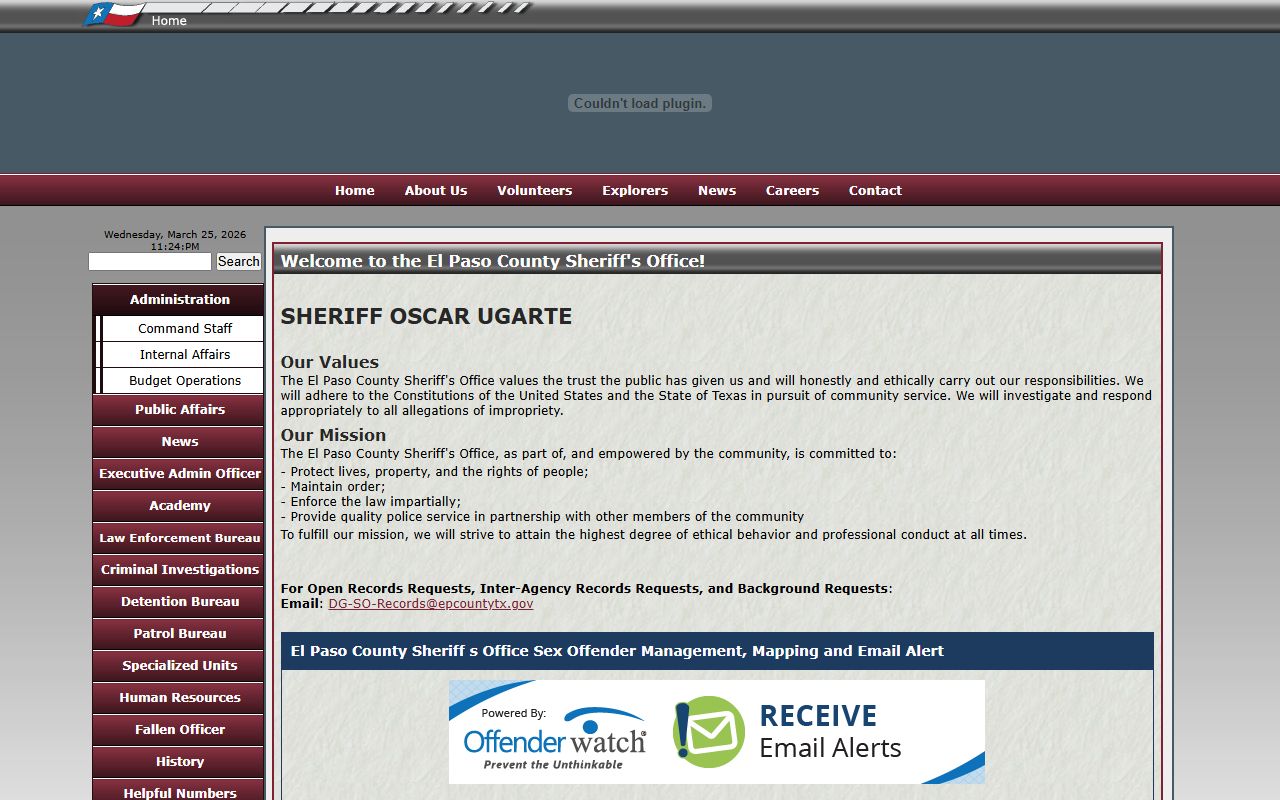
The El Paso County Sheriff's Office holds arrest records and jail booking data for the county. When someone is arrested and booked into the county jail, the Sheriff creates a record that includes the person's name, date of birth, charges at booking, bond amount, and booking date. These records are separate from court case files, but both relate to the same criminal matter.
You can contact the El Paso County Sheriff's Office at (915) 538-2292. Requests for arrest records can be made in person or by mail. The Sheriff handles arrests made by county deputies. City police in El Paso also book felony arrests through the county system. The Sheriff's website at epcounty.com/sheriff has additional contact information.
Keep in mind that an arrest record only shows what was alleged at booking. The person may not have been charged or the charges may have been dropped. The District Clerk's case file will show the final outcome. Check both sources if you need a full picture of a criminal matter in El Paso County.
Texas DPS Criminal History - El Paso County
El Paso County criminal records feed into the Texas DPS Computerized Criminal History (CCH) system. When El Paso County courts report convictions or deferred adjudications to the Texas Department of Public Safety, those records appear in the statewide database. The CCH system pulls data from all 254 Texas counties into one searchable index.
The DPS public name-based search at publicsite.dps.texas.gov costs $3 per search. Results only show convictions and deferred adjudications that were reported to DPS. Arrests without a conviction, dismissed cases, and sealed records do not show up in public results. For a more complete search, fingerprint-based checks are available through IdentoGO under the DPS FAST program.
The DPS search gives a quick statewide overview. For case-level details in El Paso County, the District Clerk's office has more complete information on each case. The two sources work best together when you need a thorough records check.
You can also check the Texas Sex Offender Registry for El Paso County residents. The registry is maintained by DPS and is searchable by name or zip code.
What El Paso County Criminal Records Contain
Criminal records in El Paso County can include a range of documents depending on the case type and stage. Felony case files held by the District Clerk typically contain the indictment, motions filed by both sides, hearing notices, plea agreements, jury instructions if the case went to trial, the judgment, and sentencing documents. Misdemeanor files at the County Clerk are similar but tend to be shorter.
Arrest records from the Sheriff's Office contain booking information: name, date of birth, physical description, charges at booking, bond amount, and release date. Jail records may also include mugshots, though not all counties make those public online. El Paso County arrest records are available through the Sheriff's Office by request.
For detailed court documents including docket entries and case notes, the District Clerk in El Paso is the right starting point for felony records. The County Clerk handles misdemeanor case files. Both offices are located at the county courthouse complex downtown.
Expunction and Nondisclosure in El Paso County
Texas law allows eligible people to have criminal records expunged or sealed. Expunction under Texas Code of Criminal Procedure Chapter 55 removes and destroys records for cases that qualify. You file the petition in the district court of the county where the arrest happened. For El Paso County arrests, that means the district court in El Paso. Once granted, all agencies holding records on that arrest must destroy their copies.
Qualifying situations include acquittals, pardons, identity theft cases, and some dismissals. Not all dismissed cases qualify. If expunction is not available, you may seek an order of nondisclosure under Texas Government Code Section 411 for cases that ended in deferred adjudication. Nondisclosure seals records from the public but does not destroy them. Serious felonies and sex offenses do not qualify. Waiting periods depend on the offense class. The El Paso County District Clerk can tell you what forms apply and what fees to expect.
Cities in El Paso County
El Paso is the county seat and by far the largest city in El Paso County. All felony criminal cases from cities across El Paso County are filed in the El Paso County District Courts.
Nearby Counties
El Paso County borders Hudspeth County to the east, as well as New Mexico and Mexico. Each Texas county has its own District Clerk and court system for criminal records.