
Search Texas Criminal Records
Texas criminal records are public documents maintained by the Texas Department of Public Safety, county courts, and the Texas Department of Criminal Justice. You can search for criminal history information through the DPS Computerized Criminal History system, which covers convictions and deferred adjudications reported by courts and law enforcement agencies across all 254 counties. Each county also keeps its own court records through the District Clerk and County Clerk. This page explains where to look, how to search, and what to expect when accessing Texas criminal records.
Texas Criminal Records at a Glance
Texas DPS Crime Records Division
The Texas Department of Public Safety Crime Records Division is the main agency for criminal history information in the state. It acts as the Texas State Control Terminal for eight state and national criminal justice programs. The Division collects data from law enforcement and courts across all 254 counties and feeds that information into both state and national databases, including the FBI's national system.
Crime Records Services is the part of the Division that handles public access. Local criminal justice agencies submit data to DPS, which is compiled into the Computerized Criminal History (CCH) system. That system is the source for public criminal history searches in Texas. The Division also manages the Criminal Justice Information Service (CJIS) Security Office, which audits agencies to make sure they follow FBI policies on handling criminal data.
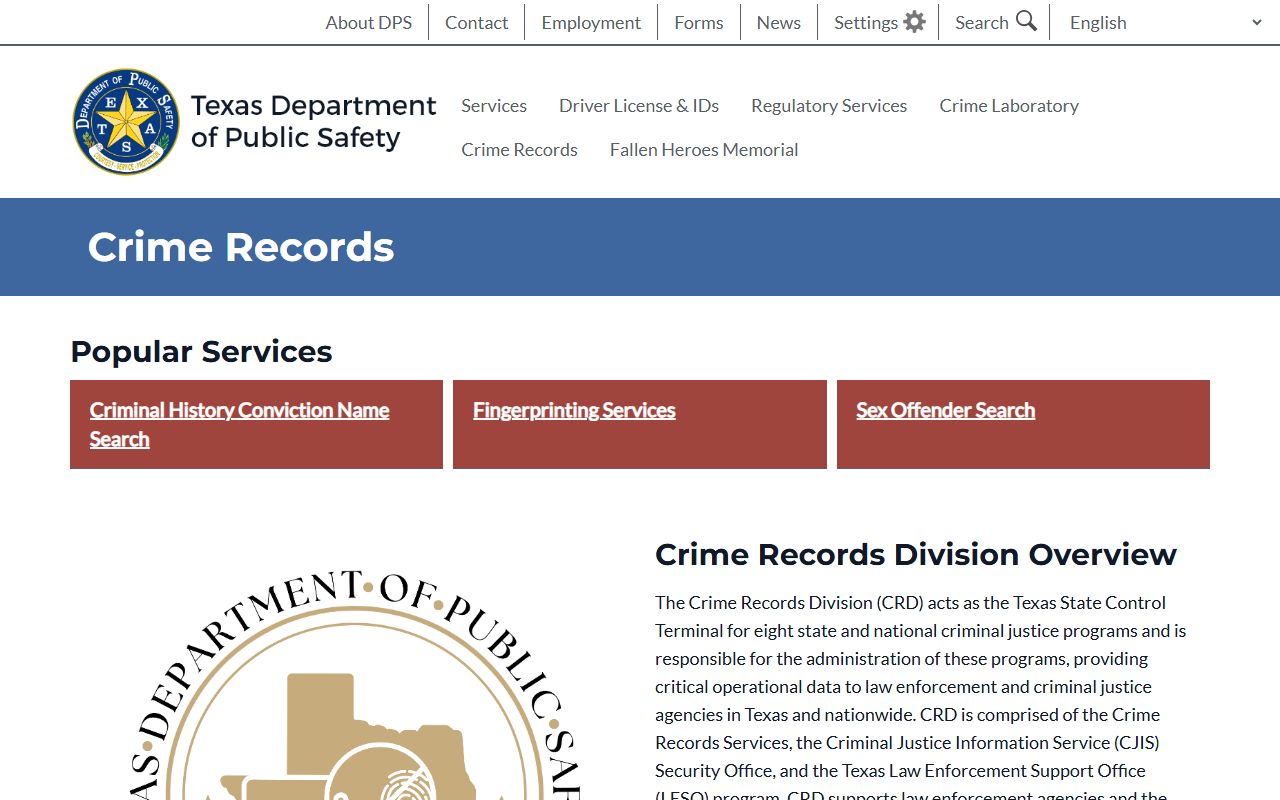
DPS also serves as the clearinghouse for non-criminal (applicant) fingerprints. Employers and licensing agencies that need fingerprint-based background checks go through DPS for those results. The public criminal history database only shows conviction and deferred adjudication data. Arrest information is only visible when it ties directly to a conviction or deferred adjudication that has been reported to the system.
How to Search Texas Criminal Records Online
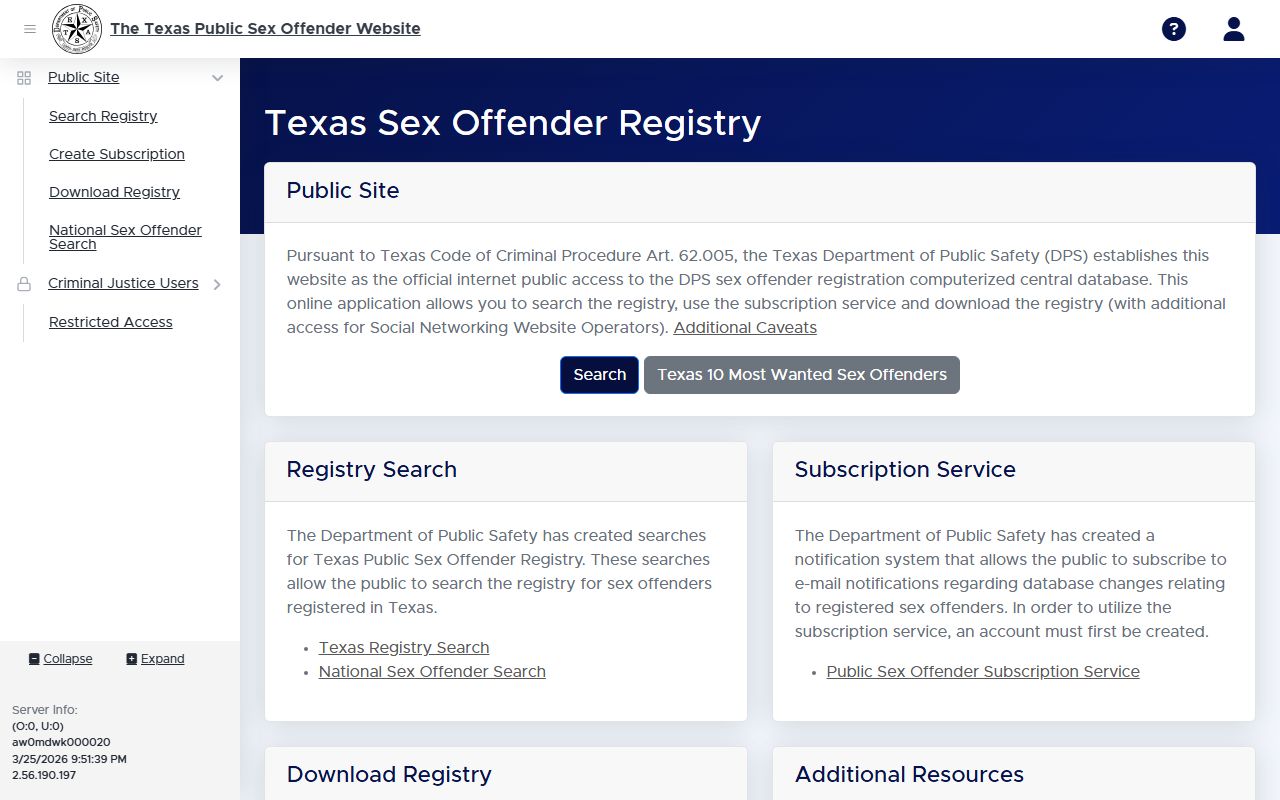
The DPS public criminal history site at publicsite.dps.texas.gov lets anyone search for conviction records. You create a free account, buy search credits for $3 each, and run name-based searches. The system pulls from the CCH and returns conviction records, deferred adjudications, and related arrest information that has been reported by courts and law enforcement statewide.
To run a search, you need at least a last name and first name. Adding a date of birth narrows results and helps when the name is common. The system will show a list of possible matches. Each result includes the person's name, date of birth, and Statewide Person Number (SPN). Click a name to see their full conviction history, including offense, date, court, and disposition. You can print results or save them as a PDF. Search credits are valid for one year from the purchase date.
For a fingerprint-based search of your own record, schedule an appointment through IdentoGO, which handles Fingerprint Applicant Services of Texas (FAST). The fee is $10 for the fingerprint service plus $15 for the criminal history record. Results are mailed or emailed within 7 to 14 business days. If you don't get results within 14 days, call DPS at (512) 424-7256.
What Texas Criminal Records Contain
A Texas criminal history record from the DPS CCH system includes all convictions and deferred adjudications that have been reported by criminal justice agencies. Each entry shows the offense, the date it occurred, the court and county that handled the case, the disposition (convicted, deferred adjudication, dismissed), and the sentence if one was imposed. Physical identifiers like name, date of birth, race, and sex are also part of the record. Some records include a photograph.
The public version of the CCH only shows what has been reported to DPS. Not every arrest appears. An arrest only shows on a public record when it is tied to a conviction or deferred adjudication that the court reported to DPS. Cases that were dismissed, acquitted, or never prosecuted generally do not appear in the public database. Cases that ended in expunction have been removed.

The Texas Department of Criminal Justice (TDCJ) maintains separate records for state prison inmates. The TDCJ offender search lets you look up individuals by last name, first initial, TDCJ number, or State ID number. Results show the offender's status, projected release date, and offense information. TDCJ's general information line is (936) 295-6371 or (800) 535-0283. The TDCJ manages about 54 state-operated prison units, state jails, and parole centers across Texas.
Texas Court Criminal Records
Court criminal records are separate from the DPS conviction database. Each county District Clerk maintains the full case file for every felony case filed in that county. The County Clerk keeps misdemeanor records. These files hold the charging documents, docket entries, motions, orders, and final judgment. The actual case files are public records you can request from the clerk's office in the county where the case was filed.
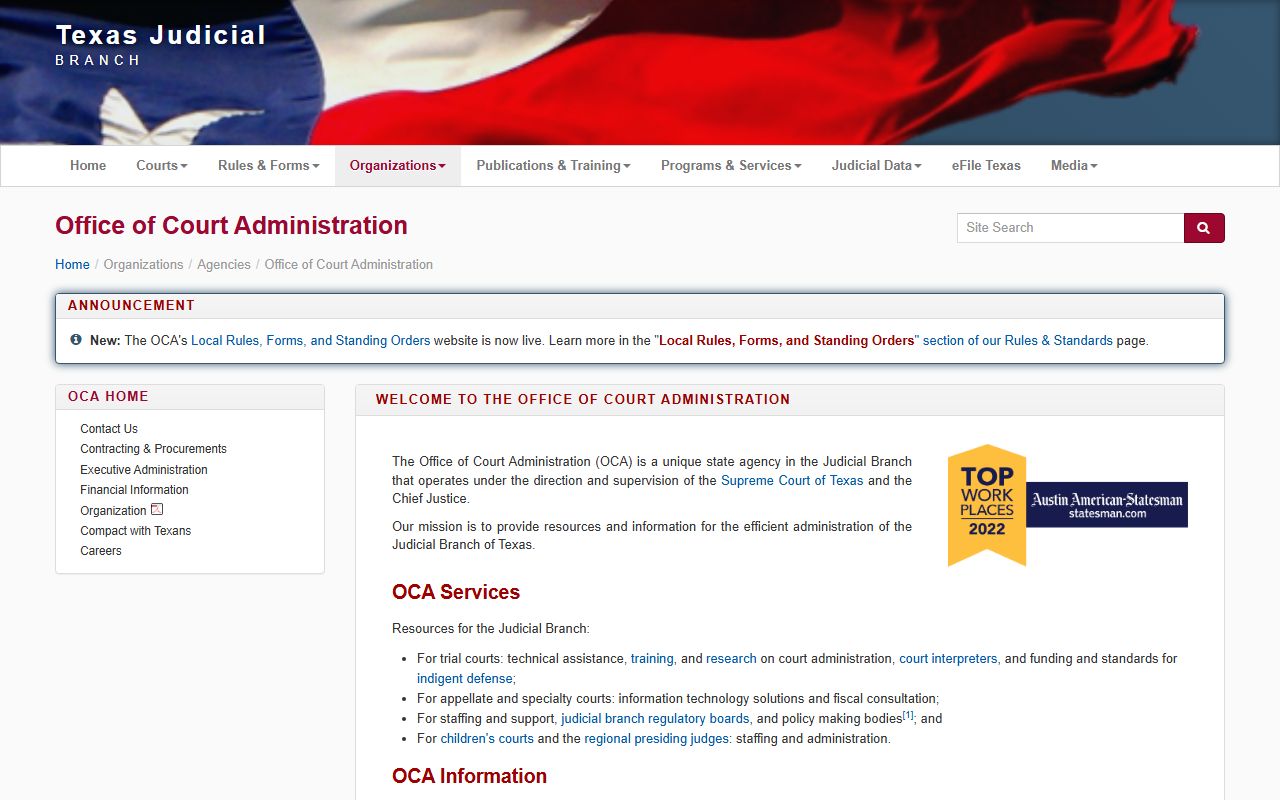
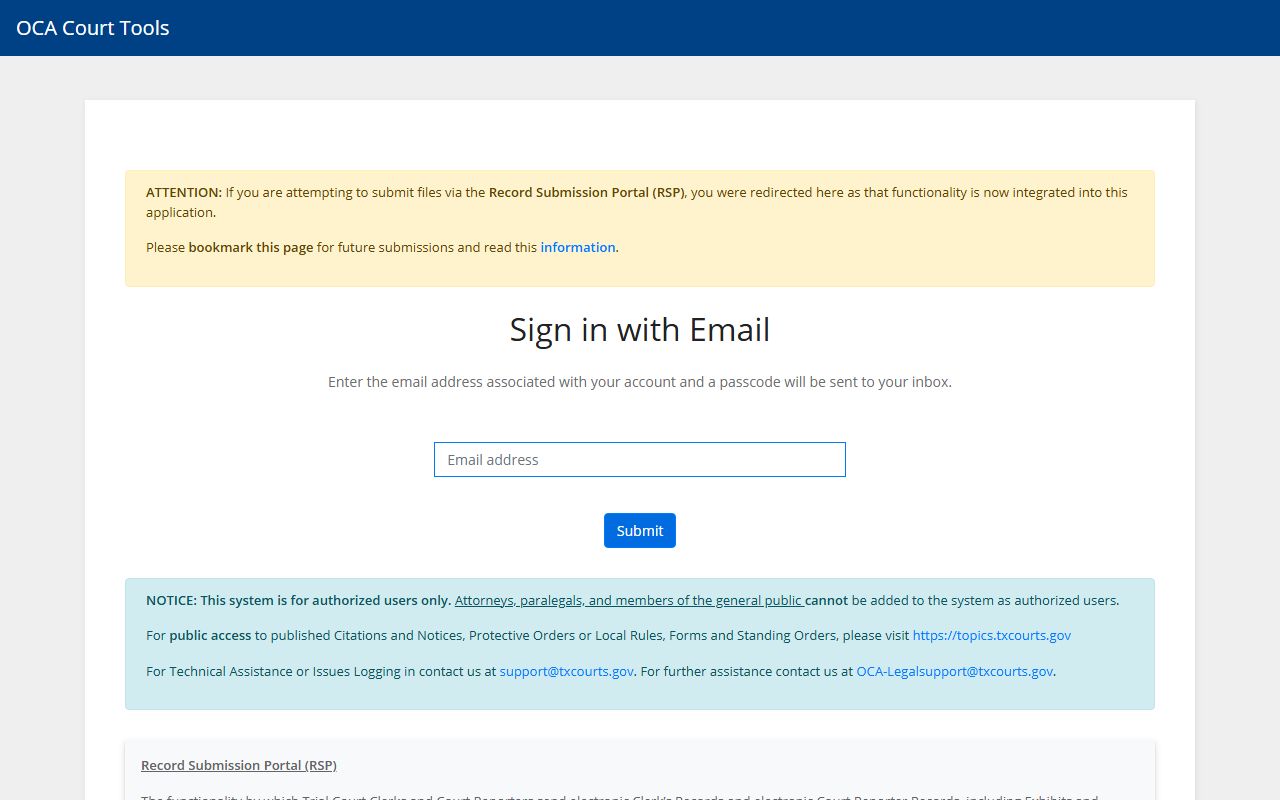
The statewide court records portal is OCA Court Tools, which includes access to various court information systems. Many larger counties also run their own online case search portals. Harris County uses the JIMS system at records.harriscountytx.gov. Dallas County has an online record search at dallascounty.org. Tarrant County offers a free self-service document lookup at the Tim Curry Justice Center. Bexar County has an online search at search.bexar.org.
Note: Copy fees at most District Clerk offices are $1 per page for non-certified copies plus a $5 certification fee for certified copies. Some counties charge slightly different rates. Call the clerk's office directly to confirm fees before you make the trip.
Expunction and Nondisclosure in Texas
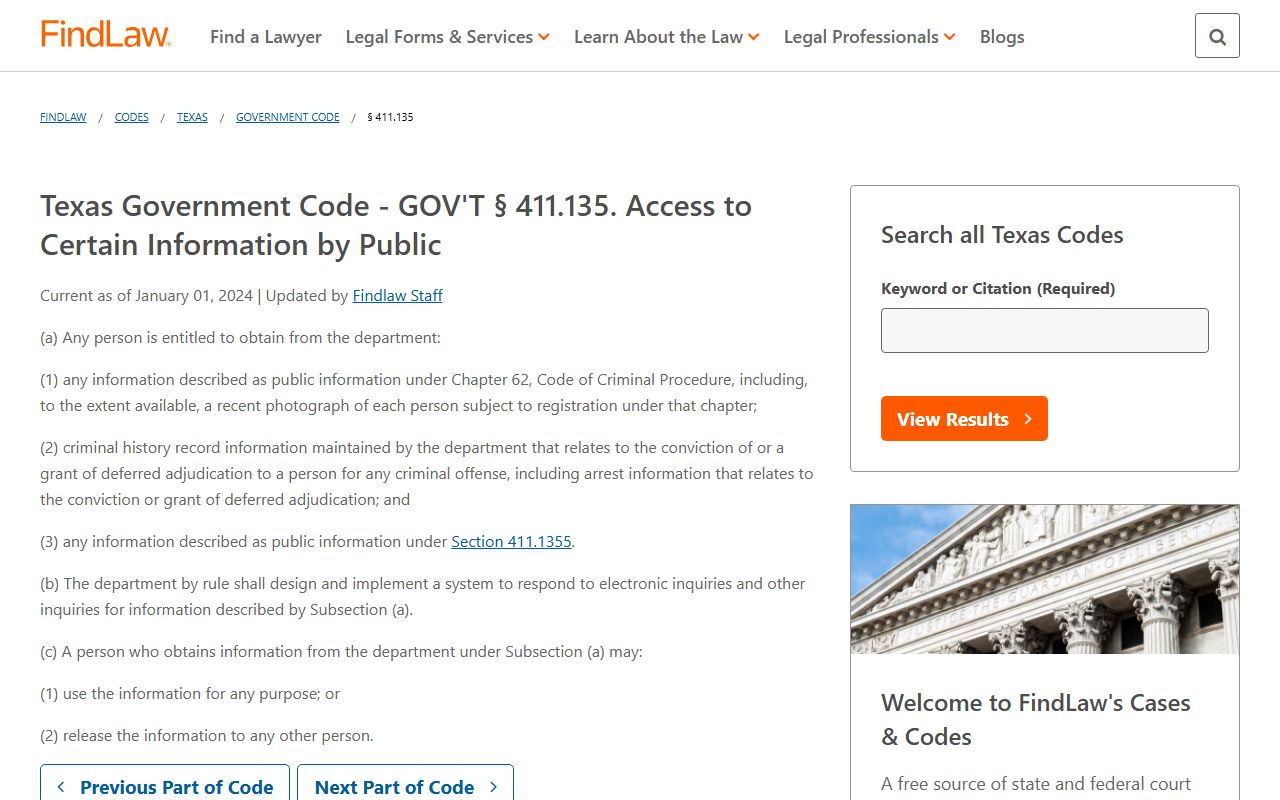
Texas Code of Criminal Procedure Chapter 55 governs the expunction of criminal records. Expunction allows eligible individuals to have arrest records, court records, and related documents destroyed or returned. Grounds for expunction include acquittal, pardon, identity theft, and certain dismissed charges. Not every dismissed case qualifies, so it is worth checking your eligibility with an attorney or legal aid organization.

An order of nondisclosure is different from expunction. Under Government Code Chapter 411, certain individuals who completed deferred adjudication community supervision may petition for a nondisclosure order. This order prevents criminal justice agencies from publicly disclosing the record. It does not destroy the record but removes it from public view. Serious offenses including those requiring sex offender registration, aggravated kidnapping, and murder are not eligible. Waiting periods vary: most misdemeanors have no waiting period, while felonies require five years after discharge and dismissal.
Public Information and Court Access
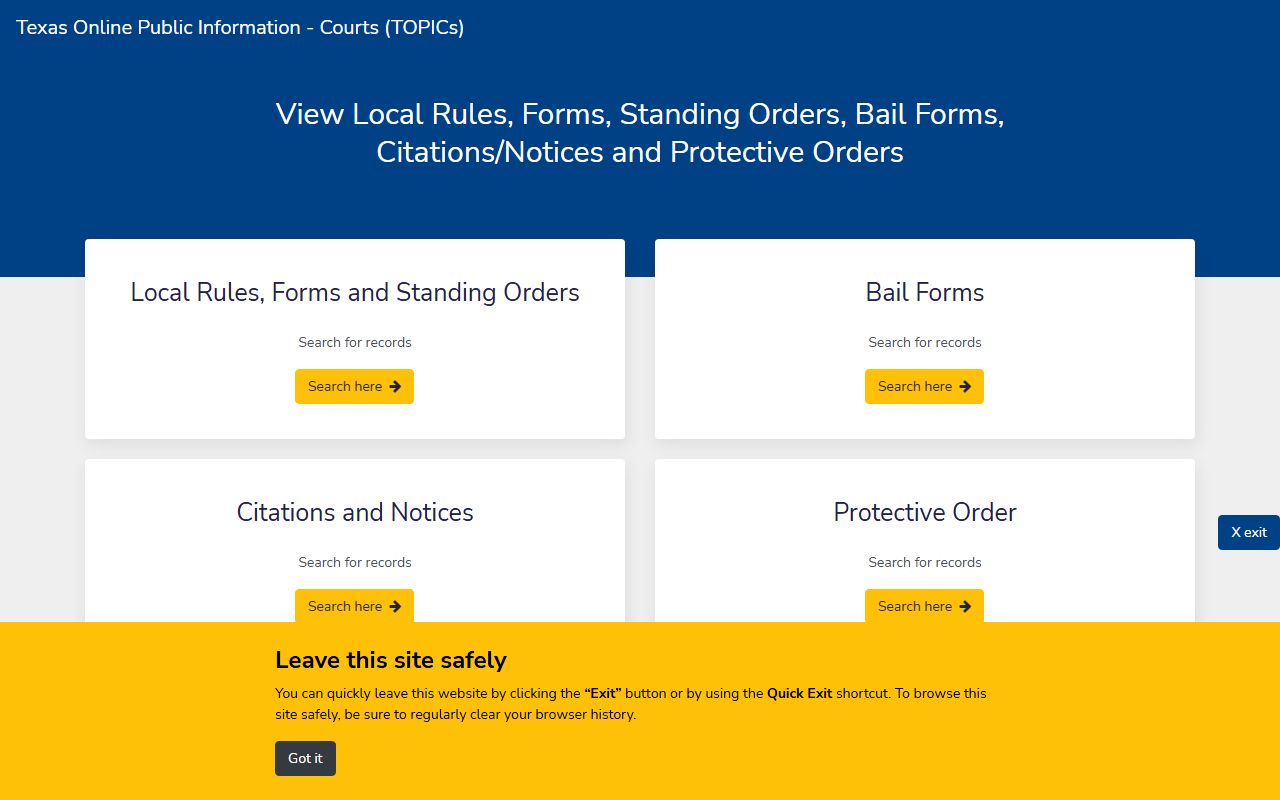
The TOPICs portal provides access to local court rules, forms, standing orders, bail forms, and the statewide Protective Order Registry. The registry was created under Monica's Law (SB 325, 2019) and gives limited public access to protective orders when the protected person has authorized it. The portal is used by courts, attorneys, and the public to access court-specific procedures and orders.
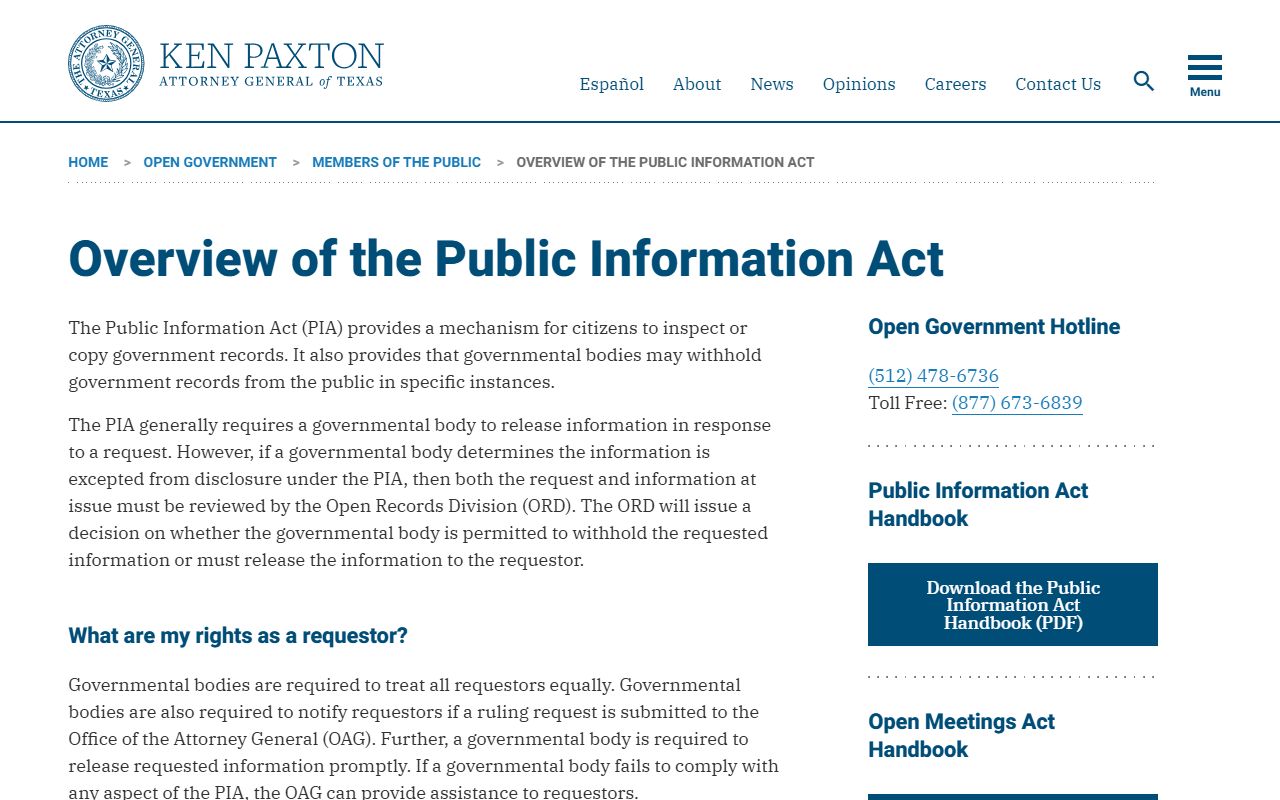
The Texas Public Information Act gives the public the right to request government records. Under the Act, governmental bodies must respond promptly, and most records must be released unless a specific exception applies. If a government body believes information is exempt, it must seek a ruling from the Attorney General's Open Records Division. You can submit a public information request to any county, city, or state agency that holds criminal records.
Juvenile Criminal Records in Texas
Juvenile records in Texas are confidential and not available to the public. Under Texas Juvenile Justice Department rules and Texas Family Code Section 58.005, records of conduct that occurred before age 17 are restricted. Only the juvenile, parents or guardians, attorneys, and certain authorized agencies may access these records.

Juvenile records may be sealed by court order. After sealing, the individual may legally deny the existence of those records in most circumstances. Sealing does not happen automatically but requires a petition to the court. Records that resulted in certification as an adult and prosecution in adult court are generally treated the same as adult criminal records and may be public.
Texas Court Tools and Resources
The OCA Court Tools system at courtal.txcourts.gov gives access to a range of judicial information systems. This includes court calendars, case lookups, and statistical data. The system is used by courts, attorneys, and the public to access information about cases in the Texas court system.
For legal help with criminal records matters in Texas, contact Lone Star Legal Aid at (800) 733-8394 for east and southeast Texas, or Texas RioGrande Legal Aid at (888) 988-9996 for central, south, and west Texas. The State Bar of Texas lawyer referral service is available at (800) 252-9690. Self-help guides for expunction and nondisclosure are available at texaslawhelp.org.
Browse Texas Criminal Records by County
Each Texas county maintains criminal court records through the District Clerk (felony cases) and County Clerk (misdemeanor cases). Select a county to find local contact information, office hours, and resources for criminal records in that area.
Criminal Records in Major Texas Cities
City residents have criminal cases handled through the county court system. Select a city below to find out where criminal records are filed and how to access them in your area.